
Master’s Degree in computational neutronics at UNED
1 YEAR DURATION

60 ECTS CREDITS

Built on UNED’s extensive experience in advanced computational neutronics, MUNC provides applied, industry-oriented training for students and professionals ready to tackle real nuclear analysis challenges. Check it at TECF3IR research team

MARKET-CONNECTED THESIS INTERNSHIP

TUITION FEE 2101.2 €
What you will learn to do
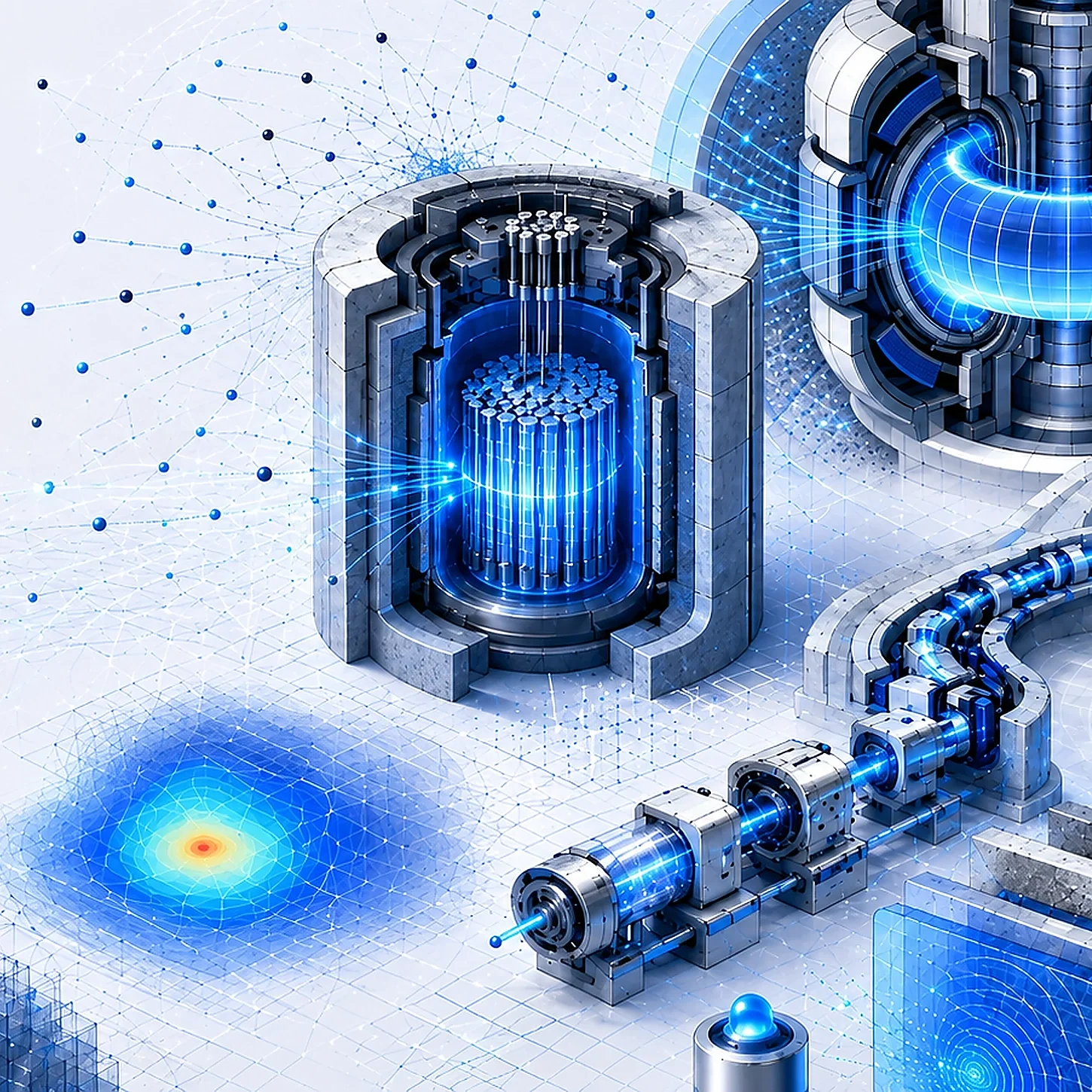
Where do all those neutrons go? One comprehensive, fully open-source workflow. Many real-world applications
Turn complex nuclear problems into reliable computational analysis
MUNC trains students to move from physical questions to computational models, from simulations results to radiation-field analysis, and from technical evidence to design or safety decisions
Translate: Formulate physical nuclear problems as computational models, including geometry, materials, sources and relevant response quantities.
Simulate: Use a comprehensive, fully open-source workflow to perform radiation transport, shielding, activation and related neutronics calculations.
Analysis: Characterise neutron and secondary radiation fields, interpret simulation outputs and assess uncertainty, sensitivity and engineering relevance.
Decide: Translate computational results into design, optimisation, safety or licensing-support decisions for real nuclear technology problems.
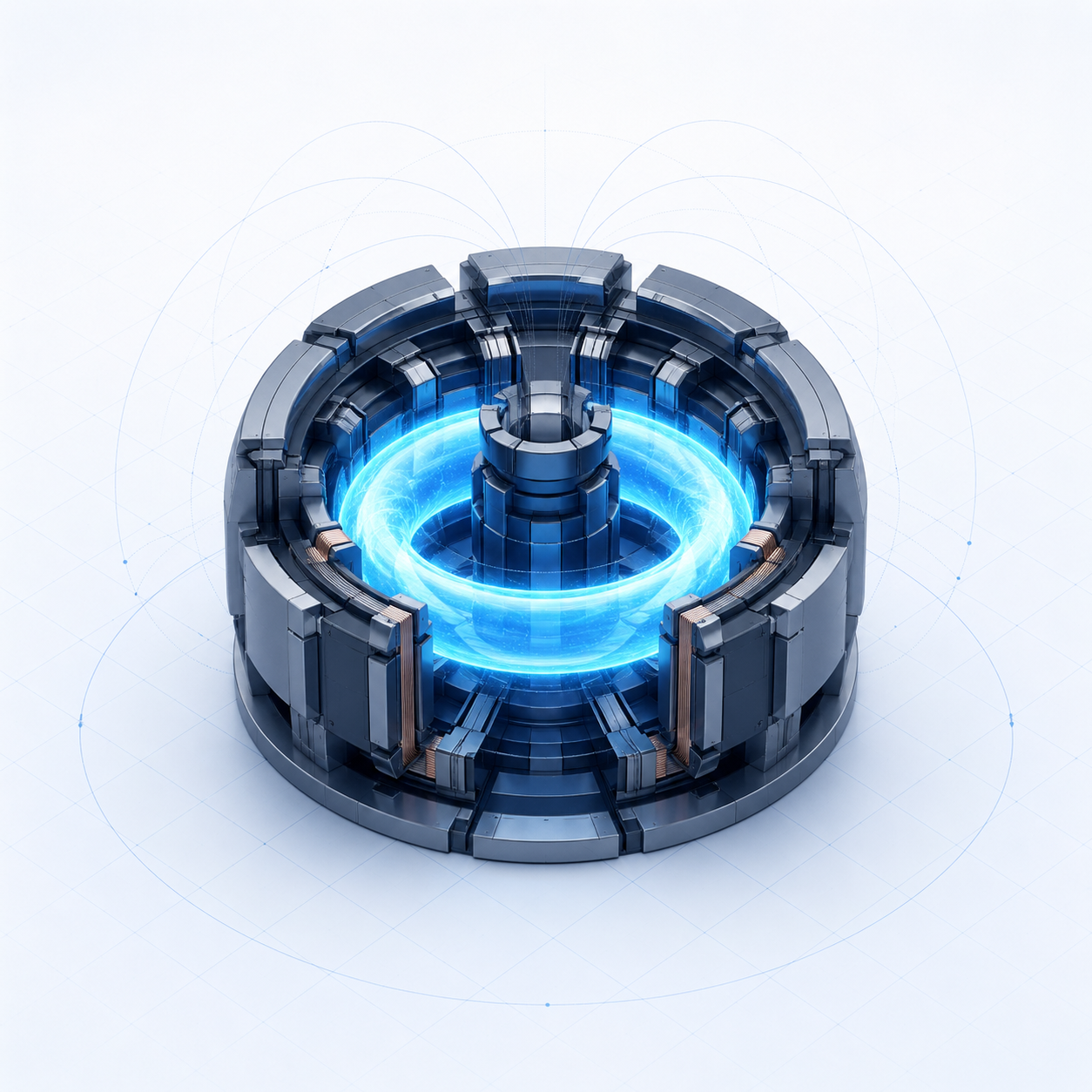
Fusion Energy
Supporting the development of fusion reactors and the path to commercialization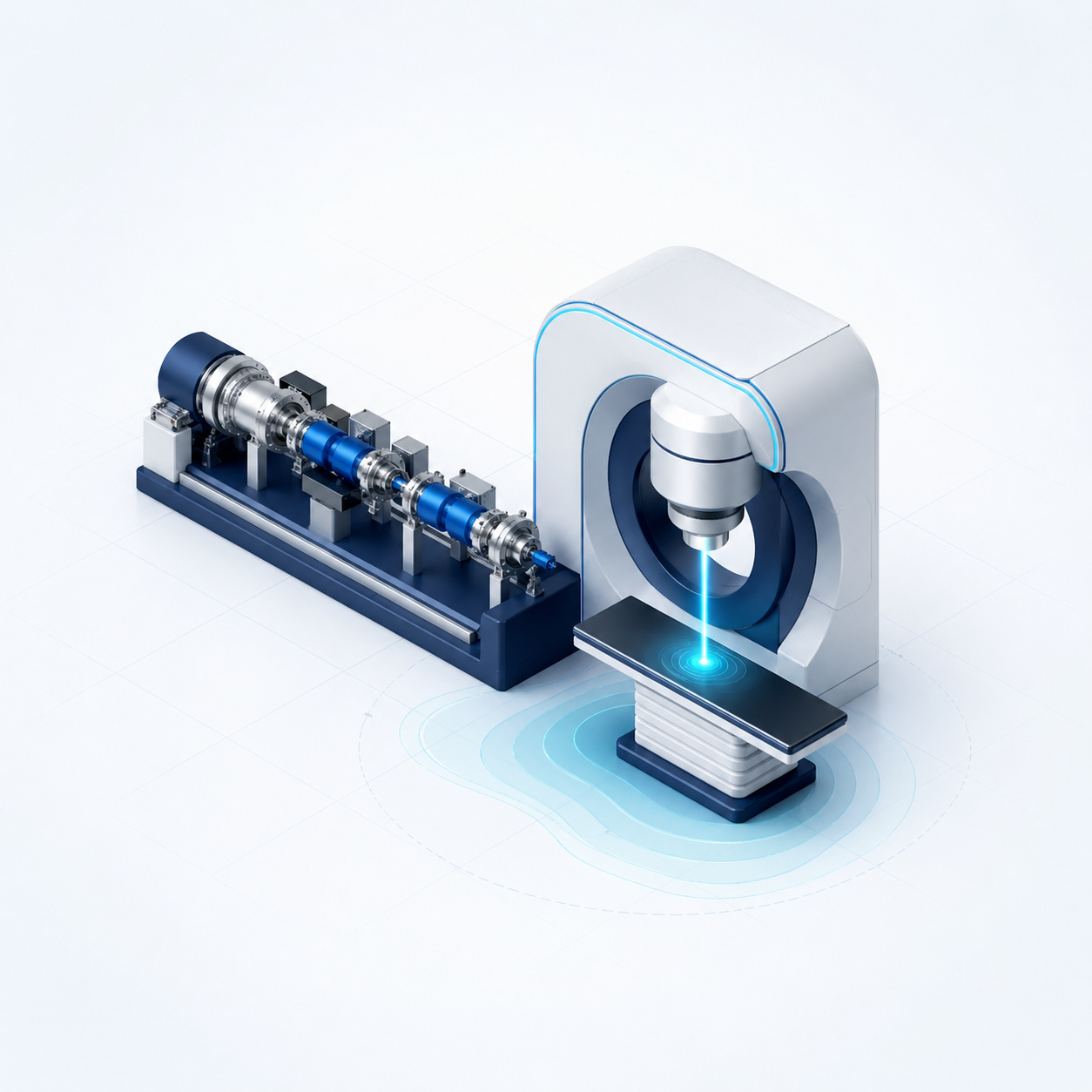
Accelerators
Enabling advances radiation applications in science, industry and healthcare.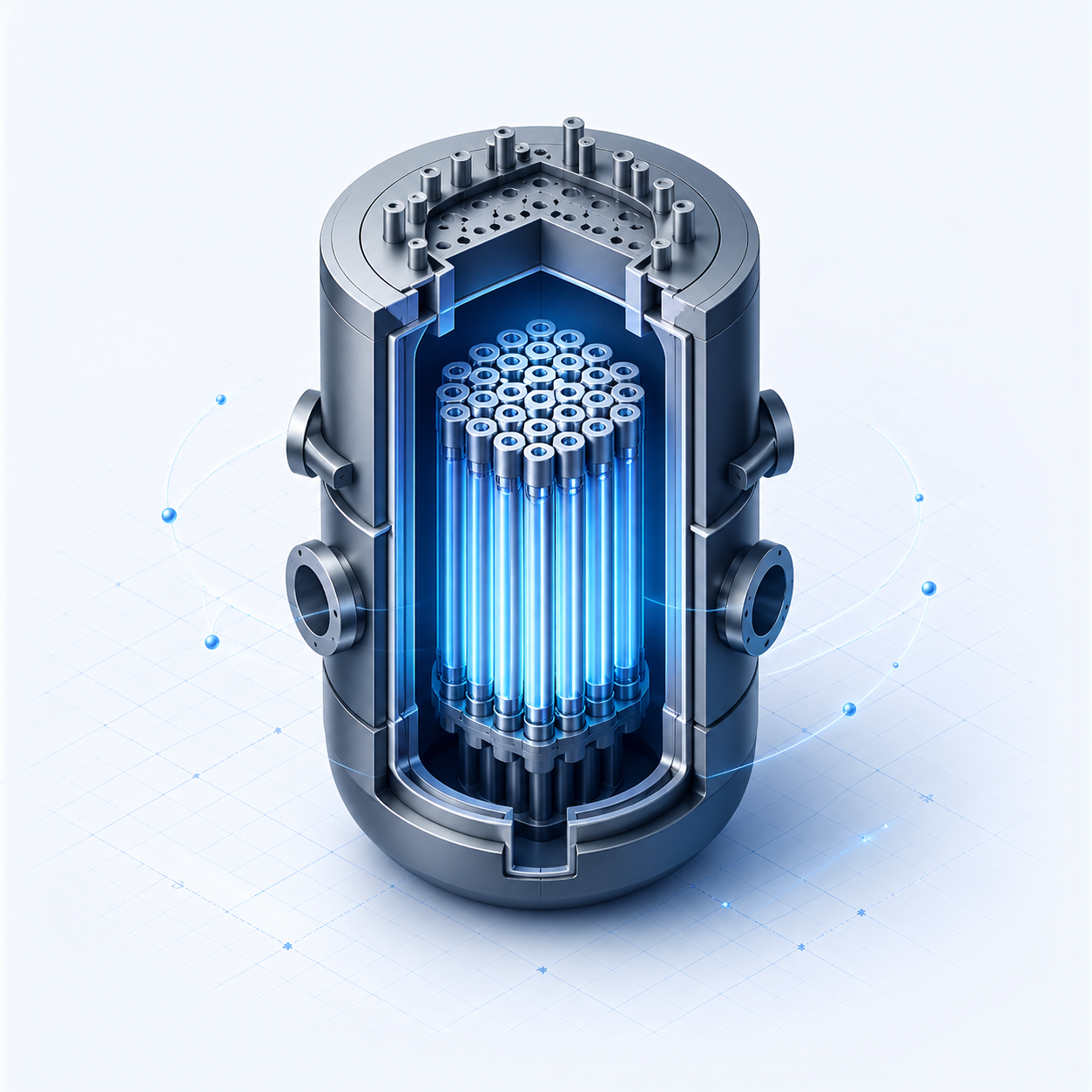
Fission Energy
Improving the performance and safety of current and future nuclear systemsHow the programme works

Oct 26
Next edition of the MUNC is approaching. Contact us to stay tuned
Online courses
Seven courses delivered 100% online with flexible learning-
Basics of radiation transport - 6 ECTS
Data analysis for computational neutronics - 6 ECTS
Monte Carlo method for radiation transport - 6 ECTS
Temporal evolution of the isotopic inventory - 6 ECTS
Modeling for radiation transport simulations - 6 ECTS
-
Advanced nuclear analysis - 6 ECTS
Neutronics for nuclear fusion facilities - 6 ECTS
-
The Final Master Thesis will be carried out in a market agent under supervision from UNED. Project matchmaking and on site works are promoted but not mandatory. Mobility and internship funding is available.

Exams in person
Examinations are taken in person at UNED premises (80 centers in 22 countries)
Market-connected thesis
The Final Master Thesis is carried out with a market agentMUNC is deployed in hybrid scheme (online & on-site) over 1 academic. First semester is conceived to acquire the basics literacy and tools of computational neutronics. Second semester contains two online courses on advanced neutronics techniques and contextual aspects. In addition, a Final Master Thesis is carried out preferentially on site with a market agent under online supervision from UNED.
Market-connected thesis internship
-
ITER Organization (Aix-enProvence, France)
Fusion for Energy (Barcelona, Spain)
IFMIF-DONES (Granada, Spain)
Ciemat (Madrid, Spain)
Proxima Fusion (Munich, Germany)
Esteyco (Madrid, Spain)
Tekniker (Guipúzcoa, Spain)
Universidad de Sevilla (Sevilla, Spain)
-
FuseNet mobility funding
ITER internship programme
Proxima Fusion internship programme
UNED internship programme
-
Residence and code license-related restrictions might exists for non-EU students. It is a student’s sole responsibility to adress them. Online master thesis are always available to conform a fully online proramme.
Why MUNC?
MUNC is the first Master’s Degree worldwide of its type. Built around UNED’s network of market agents, it trains autonomous analysts ready to produce nuclear analyses. MUNC brings students into real technical environments during their thesis.
-
Computational Neutronics is a key discipline for advanced nuclear technologies. It is used to analyse how neutrons and secondary radiation behave in complex systems, helping engineers and scientists design, optimise and assess fusion devices, fission systems, accelerators, shielding solutions and radiation applications.
Studying Computational Neutronics means developing a highly specialised capability that is increasingly needed by industry, research organisations and technical institutions. It is a field with strong technical depth, real-world relevance and growing demand.
-
MUNC is the first Master’s Degree worldwide focused on Computational Neutronics. It has been designed to provide a direct and applied route into a field that is usually accessed through much longer training paths.
The programme is taught in English, strongly industry-oriented and built on UNED’s extensive experience in advanced computational neutronics. It also benefits from a network of market agents that allows students to connect their training with real technical environments during the Final Master’s Thesis.
MUNC is designed not only to teach concepts, but to train autonomous analysts ready to produce nuclear analyses in professional settings.
-
No. You do not need to be an expert programmer before starting the programme.
A technical background in Physics, Nuclear Engineering or related engineering fields is recommended, and some familiarity with computational tools will be helpful. However, the programme is designed to help students progressively build the practical skills needed for computational work in neutronics.
What matters most is having a solid scientific or technical foundation, motivation to work in a quantitative environment and willingness to learn applied computational methods.
-
MUNC prepares students for a wide range of technical and professional opportunities in the nuclear sector. Graduates may pursue careers in:
Fusion technologies
Fission systems
Accelerator-based facilities
Medical and radiation applications
Shielding and activation analysis
Technical support and safety assessment
Research organisations and laboratories
Nuclear supply chains and advanced technology companies
Further academic work, including PhD studies
The programme is designed to prepare graduates for roles where they can contribute directly to nuclear analysis, simulation and technical decision-making.
-
The Final Master’s Thesis is one of the most distinctive parts of MUNC. It is a four-month applied project connected to a relevant market agent and supervised by UNED.
Students are matched with thesis opportunities according to their profile, interests and available hosts. The thesis may be carried out on site or remotely, depending on the project and the host institution.
Its purpose is to connect academic training with real technical challenges and help students consolidate their skills in a professional environment. Through the thesis, students gain practical experience and move closer to becoming autonomous computational neutronics analysts.